Books

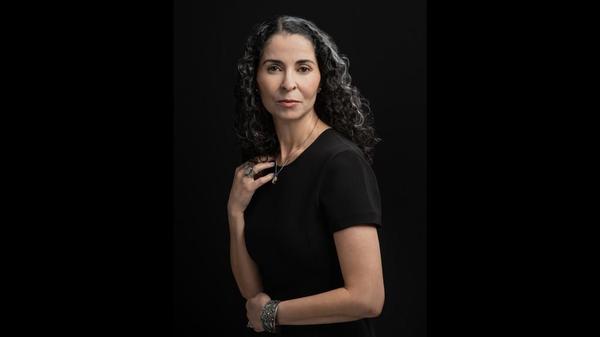
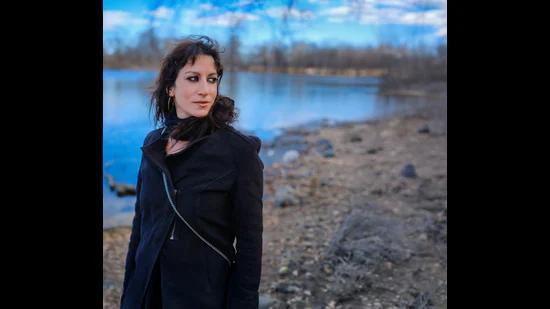
Home is where the hurt is: Talking to Palestinian-American writer Hannah Lillith Assadi

Eventually, in America, he meets Sarah, a Jewish woman whose love brings both refuge and pain. What has it been like to reckon with this legacy? Excerpts from an interview.It traces the journey of a five-year-old Palestinian boy named Sufien from his ancestral home on a hilltop in Safad (now part of Israel) — a place where the family had lived for so many centuries, they had no memory of ever being anywhere else — to a refugee camp in Syria, a tiny flat in Kuwait, then life as a student in Italy...
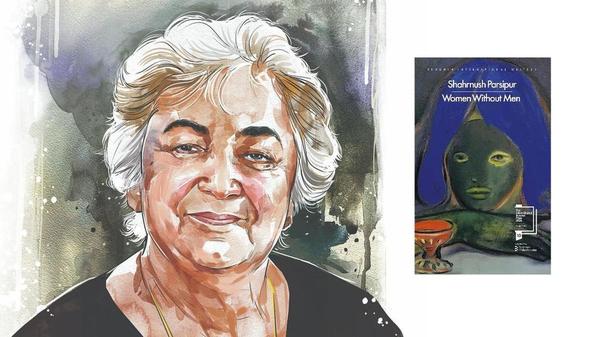
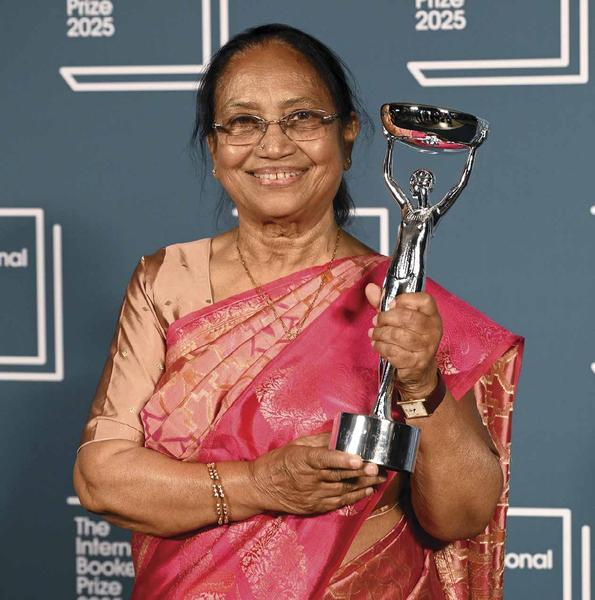
Exiled Iranian writer Shahrnush Parsipur on her International Booker Prize-nominated novella

In writing Women Without Men (Zanan bedun-e Mardan), Shahrnush Parsipur gave her female characters a freedom that cost her her own. Set against the CIA-backed 1953 coup in Iran, the novella follows five women — a sex worker, a schoolteacher, a menopausal housewife, and two unmarried women — all seeking escape from the religious diktats governing their lives. In the book, virginity is divorced from honour, and shame is cast aside to create identity.The vision was radical for its time. Published i...

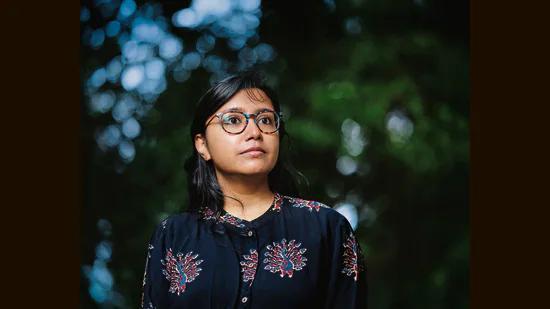
A dystopic Kolkata fast running out of food: Wknd talks to Megha Majumdar about her new book

“It is incredibly sad to read such dire predictions about the future of your hometown,” Majumdar says. Excerpts from an interview.As the plot unfolds, Majumdar the anthropologist’s intricate research glimmers through. The details she weaves into her tale, to indicate how Kolkata got to this point, are inspired by a real-world report released in 2021 by the Intergovernmental Panel on Climate Change (IPCC), which predicts that Kolkata could be, on average, 4.5 degrees Celsius hotter (than pre-indu...

Kiran Desai: ‘All cultures are rooted in magic’

It wasn’t until a painting arrived in her post, a gift from the Italian artist Francesco Clemente, that Kiran Desai’s latest novel – The Loneliness of Sonia and Sunny – came into being, eventually finding its way onto last year’s Booker Prize shortlist.


The haunting artwork from Clemente’s 108-watercolours series, titled Emblems of Transformation, depicted a black, faceless, eyeless deity adorned with jewels, suffused with ochre, with a heart for an abdomen at the centre of its body. Drawn to...

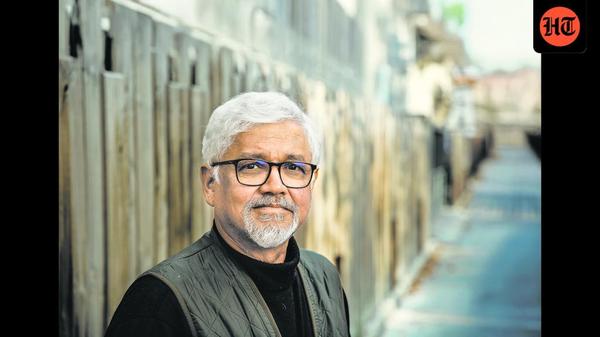
‘The world is far stranger than we imagine it to be’: A Wknd interview with Amitav Ghosh

For him, these realms in which fact and make-believe are braided together form ever-present parallel dimensions of a kind, since no two versions are ever quite the same. Ghosh’s new book, Ghost-Eye, due for release on December 15, works to extend the idea of what constitutes our past, invoking concepts of reincarnation and past life. At the heart of this narrative is Varsha, a three-year-old girl from a family of vegetarian Marwaris in Kolkata, who suddenly refuses to eat anything but fish, and...

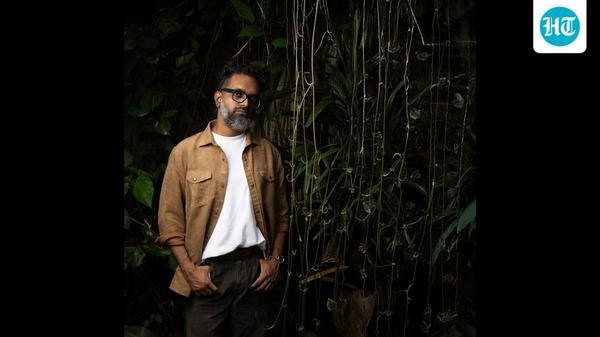
The eras tour: A Wknd chat with Vajra Chandrasekera, author of the award-winning Rakesfall

Time twists, bends and folds back on itself, in Rakesfall. The protagonist, who goes by different names in different epochs, steps through her various lives at will; travels through worlds of the living and the dead, and through domains in which the two overlap so densely that courts must rule, in surreal judgements, on how they may best coexist. It is a wild ride, in other words; one that sweeps through dystopias to end with some pale hope. All of which is why the Sri Lankan writer Vajra Chandr...

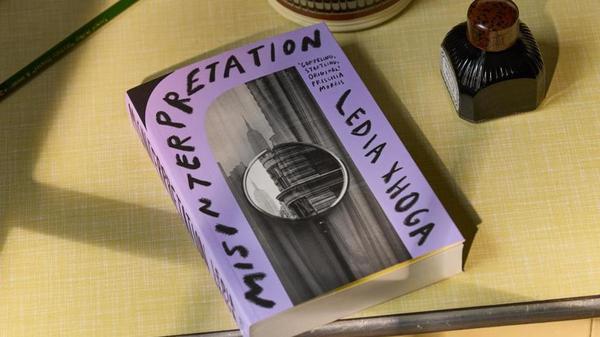
In conversation with Ledia Xhoga, author of Booker-longlisted novel Misinterpretation

To be human is to empathise. Or is it? Can we even call it a binding impulse when it was barely recognised until the past century? For most of our long history, empathy was less seen as a moral instinct than as an aesthetic impulse — something stirred by art or nature, by the elusive smile on the Mona Lisa or the sweep of birds breaking and re-forming across the sky. Only recently have we begun to understand it as a way of knowing one another, of seeing more clearly. Yet, clarity can deceive. Se...

Interview | Andrew Miller on his Booker-shortlisted novel, The Land in Winter

Two-time Booker Prize nominee Andrew Miller plucks on words as if they are strings on a guitar. In almost all his works, rich and taut emotions linger long afterwards. In this year’s Booker-nominated title, The Land in Winter (published by Sceptre), Britain has turned gelid in one of its longest and coldest winters in history.It is 1962, and the cracks in local doctor Eric Parry’s marriage start to appear while his pregnant wife Irene fights listlessness by planning a Boxing Day party. She finds...

Richard Osman: “Crime as a genre transcends genre”

When I’m a reader if I am reading a series that I love, I don’t want to wait two or three years for the next book. So, I write a book a year. With the film, I literally did not get involved for one second. The film is someone else’s vision of the Thursday Murder Club, which is lovely. But I like to work hard and want readers to find a new adventure for the Thursday Murder Club or We Solve Murders every year. That feels like the least I can do. Do you have any writerly struggles since each book...

And then there were none: Wknd interviews Palestinian author Ibtisam Azem

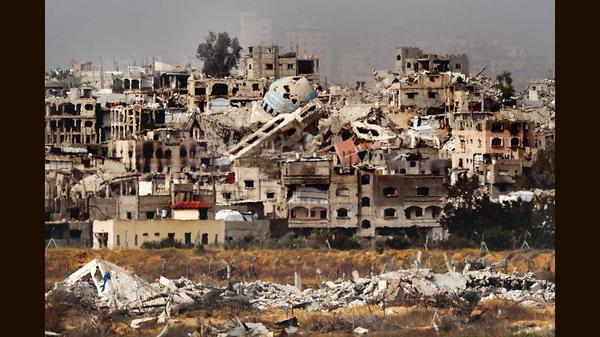
What is the fate of Gaza? What will it be? In the 77 years since the formation of Israel, there have been no clear answers. The newest plan for its future envisions another gleaming city in the desert, one that is being called a “Riviera of the Middle East”. Images from the news show starving children and bombed-out hospitals. A media tent has been bombed and journalists killed. There is now talk of Israel seizing Gaza City. Eleven years ago, when the Palestinian journalist and writer Ibtisam Az...

There are always ways to resist: Wknd interviews dystopian author Laila Lalami

In Moroccan-American author Laila Lalami’s new novel, The Dream Hotel, pre-crime surveillance has stretched its tentacles into our sleeping brains. Lalami’s heroine, Sara Hussein, is a researcher with the Getty Museum and a busy mother of toddler twins. She is returning to the US from a work trip to London when she is detained at the airport and told that her dreams have raised her risk score too high. She is then transported to a “retention centre”.These centres are privately run and have been...

Claudia de Rham: “The notion of time is not absolute”

It was always clear in my mind. When I started writing the book, it became clear that there could never have been anything else. I think gravity is fun and almost teasing us, right? It’s always there all around us, and because we know it’s going to be something we can’t avoid, it pushes us to challenge it. We all like to play with it by dropping things and seeing if we can prevent them from falling.From the point of view of theoretical physics, what I like about it is its beautiful symmetry. It’...

Year of the... dragon?: Yuan Yang’s new book explores the flip side of China’s boom

What is it like being part of the “China story”, one of 1.4 billion in an economy that has grown 3,000% since the 1980s? What do survival and success look like? How does young China cope with the added weight of a regime that treats resistance as treason? What lessons could their experience hold for the rest of us? British-Chinese writer Yuan Yang, 35, investigates these questions in her book, Private Revolutions: Coming of Age in a New China (2024).A former Financial Times (FT) journalist, Yang...

I spent years trying to be the black sheep of my family: Jeet Thayil on his deeply personal new book

It begins with his father, the journalist TJS George, flying from Bombay to Cochin in the 1950s, to visit Ammu George, a teacher he is set to marry. Against convention, he wants to privately meet her once before the wedding. The book takes off from there, merging fact and fiction, memoir, travelogue and supernatural saga in mind-bending ways. The reader isn’t meant to know which is which. “I want you to wonder… to keep guessing,” Thayil says. Fragments of postcards, letters and photographs add t...

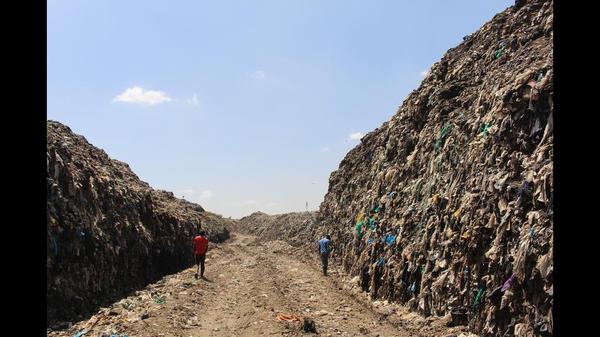
Gangs, exploding fingers, black markets: Check out the wild afterlife of trash

An empty packet of chips from the US, a diaper discarded in Germany and a plastic bottle from the Netherlands have all ended up with rice farmers-turned-trash miners in Indonesia. Primeval forests are being razed in parts of that country to make space for “trash towns”. Since 1992, this chain of islands has been “processing” thousands of tonnes of plastic waste a year, with the mounds turning fields barren and grey. In just one example, in the village of Gedangrowo in East Java, all 150 families...

Sam Leith: ‘Read what you enjoy’

It struck me that children’s literature was a slightly neglected field. I look back and think I’d made my whole career about writing, reading and thinking about books, including interviewing authors. All of that started because it rested on my own childhood reading. It also struck me that children’s literature is seen in many ways. It’s dismissed as less important than the grown-up stuff, ‘simple, unsophisticated and marginally important’. I felt strongly that the opposite was the case. These...

Stephen Greenblatt: “Shakespeare is like an enormous planet Jupiter”

When I was at the university, the overwhelmingly dominant approach to literature and culture was via New Criticism, which I had a deep immersion into. We were told that we shouldn’t be interested in anything outside the text. I remember reading Alexander Pope, and coming across an extremely misogynistic and unpleasant reference to Lady Mary Wortley Montagu. And I said, “Who is Lady Mary Worley Montagu?” I was told that wasn’t a relevant question. In the 1960s, after I graduated from Yale, I went...

How India Loves: Rituparna Chatterjee Maps Modern Relationships, Trauma, and the Search for Healing

Published : May 13, 2025 15:29 IST - 8 MINS READ Five years ago, when author and journalist Rituparna Chatterjee penned The Water Phoenix: A Memoir of Childhood Abuse, Healing and Forgiveness—about the sexual abuse she underwent at six—little did she know that it would transform her into a confidante for thousands across India. Her vulnerability resonated deeply with readers. “I suffered from borderline schizophrenia, and death by suicide was just another thing. I’ve been attempting suicide s...

James Bradley: “The ocean shapes the world”

I thought about the idea 25 years ago where I wanted to use the ocean to think about questions of history, environment and our relationship to the natural world. Obviously, the ocean shapes the world. It underpins the carbon and water cycles and is absolutely fundamental to the climate system. But the ocean also shapes the world in less obvious ways. Shipping is the global economy’s engine and enables the extraction systems that global capitalism depends upon. International trade doesn’t exist w...

The state we’re in: Author Rana Dasgupta talks awards, AI, and the decline of the nation-state

Tussling with a new book about the failure of the nation-state, British writer Rana Dasgupta, 53, was feeling like anything but a winner, when he got the call telling him that he had in fact won the 2025 Windham-Campbell prize for non-fiction. “It was a complete surprise,” he says. Capital: A Portrait of Twenty-First Century Delhi (2014) was released 11 years ago. This acknowledgement of his body of work came at just the right time, though, he says. A time when he was wrestling with whether ther...

John Vaillant: “Nature will burn the earth or flood it to make us stop”

In 2023, nearly 12 million hectares, almost as big as Nicaragua, burned to ash, emitting a copious amount of carbon dioxide. We are also losing forest cover, which is making the planet hotter. Why are wildfires becoming frequent and more lethal? What is happening is a global recalibration of forest and grassland regimes in a painful, uneven, patchwork fashion. The new fire regime can’t be stopped by us, which is a frightening prospect. In the northern hemisphere, we are seeing powerful fires th...
Load More